


HIFU Cartridge Lifespan: Shot Counts, Replacement Costs and Purchasing Questions
How many clients can one cartridge serve? A practical guide to shot counting, multi-depth inventory and cost-per-treatment planning for aesthetic clinics.
Confirm the counter definition before estimating patient capacity
How Many Clients Can One Cartridge Serve?
If one 10,000-point cartridge deducts 300–500 counted units per treatment, the theoretical capacity is 20–33 complete sessions. At 400 units per session, capacity is 25 sessions. These are inventory calculations, not fixed clinical protocols or guaranteed patient numbers.
The estimate depends on how a machine counts focal dots, trigger events and treatment lines, as well as how many individual cartridge depths are used.
What Does 10,000 Points Actually Mean?
A cartridge's 10,000-point specification must be interpreted according to its actual software counter. One focal dot, one trigger and one treatment line may represent different quantities.
If one trigger produces ten dots, 300 triggers might debit 3,000 points if every dot is counted, or 300 units if only triggers are counted. Clinics must verify the actual device counter before forecasting cartridge life.
How Many Clients Can a 10,000-Point Cartridge Treat?
For example: FLOOR(10,000 ÷ 400) = 25 complete sessions.
| Units per session | Complete sessions | Planning scenario |
|---|---|---|
| 150 | 66 | Lower usage |
| 300 | 33 | Moderate usage |
| 400 | 25 | Example budget |
| 500 | 20 | Higher usage |
| 700 | 14 | High usage |
| 1,000 | 10 | Very high usage |
These figures represent complete treatment sessions from one cartridge, rather than guaranteed numbers of unique customers. Actual usage depends on the plan, treatment areas and device's accounting rules.
What If a Client Uses Several Cartridge Depths?
When separate 1.5mm, 3.0mm and 4.5mm cartridges have individual counters, each cartridge's balance must be calculated separately. Do not combine them into a single 30,000-point pool.
| Cartridge | Example points used | Sessions available |
|---|---|---|
| 1.5mm | 100 | 100 |
| 3.0mm | 200 | 50 |
| 4.5mm | 150 | 66 |
| All three depths | 450 combined | 50 complete sessions |
In this illustration, the 3.0mm cartridge becomes the limiting consumable after 50 sessions.
These quantities demonstrate inventory accounting only; they are not suggested energy-delivery settings.
How to Calculate Replacement Cartridge Costs
The cost of a HIFU session depends on cartridge usage and actual replacement prices. A low cartridge price does not necessarily mean a low consumable cost if the counter is depleted quickly.
Calculate each cartridge separately, then add the allocated costs.
For an illustrative replacement price of €180 per cartridge, 400 counted points produce a cost of €7.20 per session. For the three-depth example above, costs are €1.80 + €3.60 + €2.70 = €8.10 per session.
When Should HIFU Cartridges Be Replaced?
Cartridges should be replaced according to the manufacturer's defined point limit, system warnings and applicable inspection requirements. Keep a usage log of depth, cartridge identifier, remaining counter and operator.
Check remaining points before each session and follow expiry warnings.
Inspect the applicator, contact surface and connectors for visible damage.
Stop operation when errors or unusual behavior occur and request technical support.
Follow the approved handling, cleaning and storage instructions.
Never bypass a manufacturer's cartridge limit or reset the counter without authorization.
10 Questions to Ask Before Purchasing HIFU Cartridges
- Does 10,000 refer to focal dots, shots, treatment lines or software units?
- Is the 10,000-point capacity specified separately for each depth?
- How are multi-row and MP modes deducted from the counter?
- Which standard and optional cartridges are included with the machine?
- What is the current replacement cost of each cartridge?
- Do quoted prices include freight, taxes and import duties?
- What warnings appear when a cartridge reaches its limit?
- What warranty applies to a cartridge that fails prematurely?
- Are replacement cartridges regularly available?
- Can the supplier provide a real counter-debit demonstration?
HIFU Cartridge Planning for the 22D HIFU Max
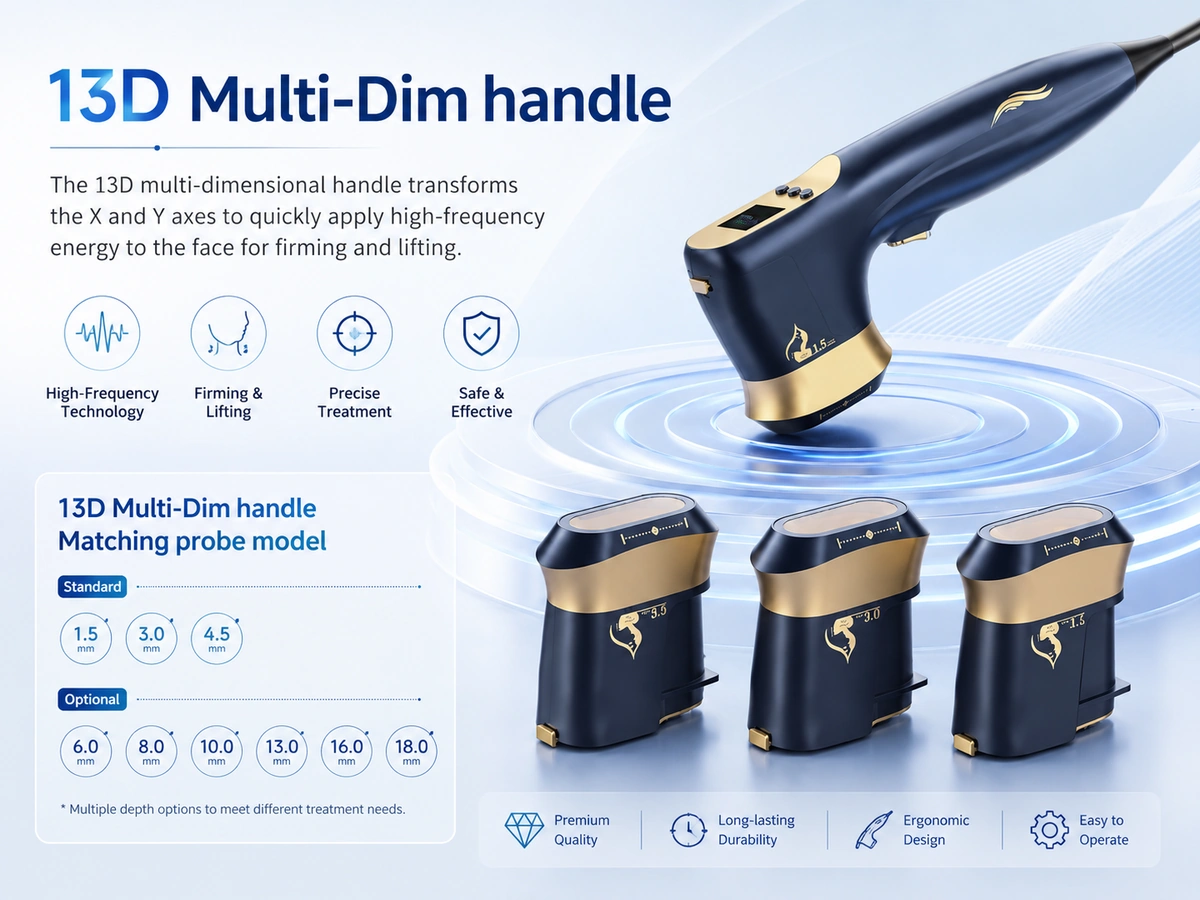
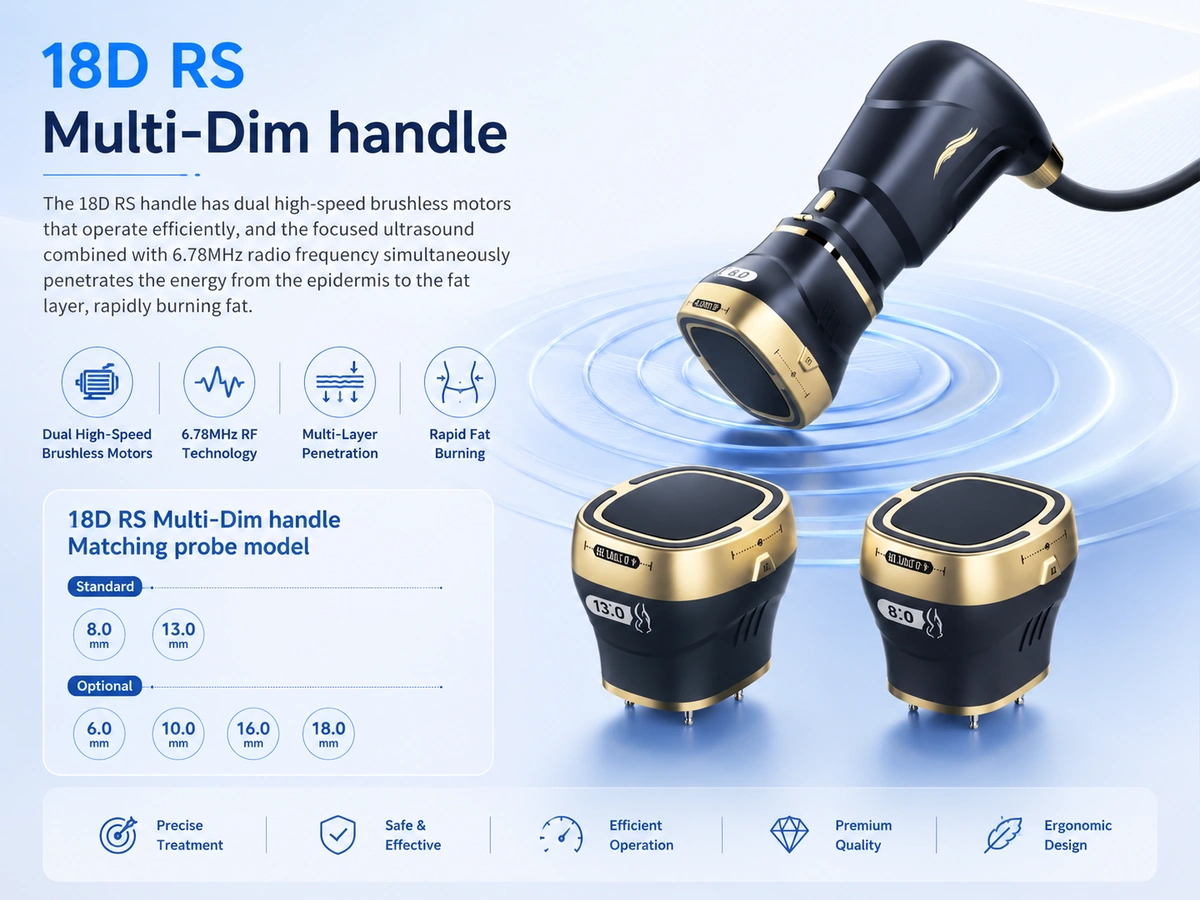
The Emmalaser 22D HIFU Max is described with a 13D facial handle and an 18D RS body handle. Its listed standard facial depths are 1.5mm, 3.0mm and 4.5mm; standard body depths are 8.0mm and 13.0mm. The 18D RS body handle also lists a 6.78MHz RF-assisted feature.
For accurate budgeting, confirm the actual 10,000-point counter definition, depth-specific cartridge life, replacement price and after-sales terms before estimating revenue.
HIFU Cartridge Lifespan FAQ
At 400 counted units per session, the theoretical capacity is 25 complete sessions. Actual lifespan depends on counter deductions and operating conditions.
At 300–500 counted units per client, approximately 20–33 complete sessions are possible from one 10,000-point cartridge. These are estimates, not fixed treatment recommendations.
Not necessarily. One activation may create several focal dots. The manufacturer's counter definition determines how capacity is deducted.
No. Separate cartridge counters must be managed independently, and a multi-depth session is limited by the first required cartridge to run out.
Multiply the replacement price by counted units consumed and divide by usable capacity, then sum the costs of all cartridges used.
Actual prices depend on depth and supplier terms. Request a current quotation; hypothetical figures in this guide are for illustration only.
Do not bypass the manufacturer's limits. Replace or service the cartridge as instructed.
Sources and Methodology
- Emmalaser 22D HIFU Max — official equipment specifications
- Systematic review of microfocused ultrasound for facial skin tightening
Numerical client and cost scenarios are illustrative calculations based on the stated 10,000-point capacity. They are not validated treatment protocols or device-specific clinical results.
Professional purchasing guidance only. Follow current equipment instructions, operator training and applicable regulations.

